
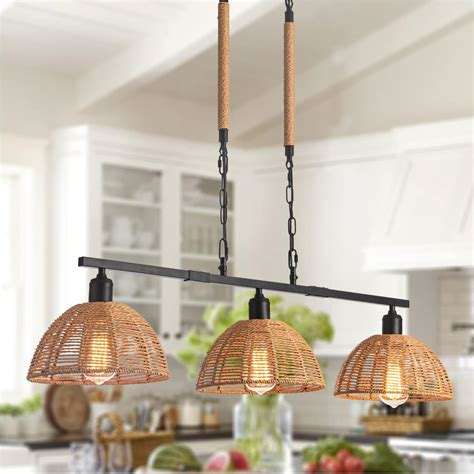
Bamboo Light Buying Guide
You see a bamboo light online, love the warm woven look, and then the questions start. Will it be bright enough? Will it feel too bulky in a small room? Can it handle a humid entryway or covered balcony? Will you end up paying for a pretty shade and then discover the bulb, dimmer, or ceiling hardware is all wrong? This guide is here to stop that spiral. You will get a practical, plain-English way to choose a bamboo light that looks good, works well, and does not become one of those “why did I buy this?” mistakes.
Bamboo lights are popular for a reason: they soften a room, add texture fast, and can make even a simple apartment feel warmer and more personal. Bamboo itself is widely used as a strong, lightweight natural material, and major climate and development groups continue to point to bamboo’s fast growth and broad substitution potential in lower-impact products and construction. At the same time, the “green” label on a product does not automatically mean the fixture is durable, safe, or right for your space. A smart purchase is never just about the shade. It is about size, brightness, bulb type, moisture rating, certification, and how you actually live day to day.
Key takeaway: buy your bamboo light the same way you would buy a good pair of shoes. First, check fit. Then comfort. Then durability. Style comes along for the ride, but it should not be the only reason you say yes.
What a bamboo light really is, and why people keep getting fooled by the pretty photos
A bamboo light usually means the visible shade is made from bamboo strips, splits, or woven bamboo over a metal frame. Sometimes the bamboo is the hero material. Sometimes it is a thin decorative wrap around a standard fixture. That difference matters because the look may be similar, but airflow, dust buildup, shade weight, and long-term durability can be very different. Bamboo is valued for being lightweight and strong for its weight, which is one reason designers love it for pendants and open shades. But the electrical safety of the fixture still depends on the hidden parts: socket, wiring, driver if it has built-in LEDs, mounting hardware, and whether the whole product was certified properly.
This is where buyers often get tripped up. You may think you are buying “a bamboo light,” but what you are really buying is a bundle of decisions: a decorative shade, a light-output system, a hanging method, and a safety profile. If any one of those parts is off, the whole experience suffers. That is why some people say bamboo lights are cozy and beautiful, while others say they are dim, dusty, or annoying. Both can be true. It depends on the fixture details.
The 7 things you should check before you buy
1. Start with the job of the light, not the look
The U.S. Department of Energy separates home lighting into three simple jobs: ambient light for general room brightness, task light for activities like reading or cooking, and accent light for mood and visual focus. Bamboo shades are often best at ambient and accent lighting because their woven structure can diffuse light beautifully, but some styles can block direct brightness and create shadows. That means a stunning bamboo pendant over a dining table may work wonderfully, while the same pendant as the only light in a dark kitchen can feel frustrating.
Ask yourself one blunt question: Do you want this light to help you see, or mainly to help the room feel good? If the honest answer is “both,” then you need a more open weave, a brighter bulb, or a second layer of task lighting nearby.
2. Check brightness in lumens, not watts
This is one of the most important shopping rules. The FTC says wattage tells you how much energy a bulb uses, while lumens tell you how bright it is. A traditional 60-watt incandescent gives about 800 lumens, and an LED can produce that same brightness using only about 9 watts. So when you compare bamboo lights, do not get distracted by watt numbers alone. Look for the fixture’s maximum bulb allowance and the light output you actually need.
Simple formula 1: brightness checkTotal target lumens = the amount of brightness you liked beforeExample: if your old fixture had 3 bulbs and each felt similar to a 60-watt incandescent, your target is about 3 × 800 = 2,400 lumens.
This formula is practical because it starts from your real life, not from abstract specs. If you liked the old brightness level, match it first. Then fine-tune the mood with color temperature and dimming.
| Common old bulb feel | Approx. brightness | Typical LED power | Good use with bamboo shade |
| 40W incandescent feel | 450 lumens | About 4-6W | Bedside, hallway, accent |
| 60W incandescent feel | 800 lumens | About 8-10W | Dining, living room, general use |
| 75W incandescent feel | 1,100 lumens | About 11-13W | Large pendant, darker rooms |
| 100W incandescent feel | 1,600 lumens | About 16-20W | High ceilings, strong ambient light |
The lumen examples above are grounded in current FTC consumer guidance and DOE LED guidance.
3. Pick the right color temperature so the room feels the way you want
Warm, cozy bamboo can look surprisingly harsh under the wrong bulb. DOE says lower Kelvin numbers look warmer and more yellow, while higher Kelvin numbers look cooler and whiter. For most indoor general and task lighting, DOE says 2700-3600K is generally recommended, and ENERGY STAR notes that 2200-3000K matches a very warm incandescent-like feel, while 3500-4100K looks whiter and 5000-6500K looks bluer.
In everyday terms, here is what that means for you:
2200-2700K: cozy, dinner-party, soft living-room mood.
3000K: warm but cleaner-looking; a safe all-round choice.
3500K: brighter-feeling and more neutral; good for work-heavy spaces.
4000K and above: often too clinical for a woven bamboo shade unless you want a crisp, modern contrast.
If you are unsure, 3000K is the easiest starting point for most bamboo pendants. It keeps the natural material looking rich instead of washed out.
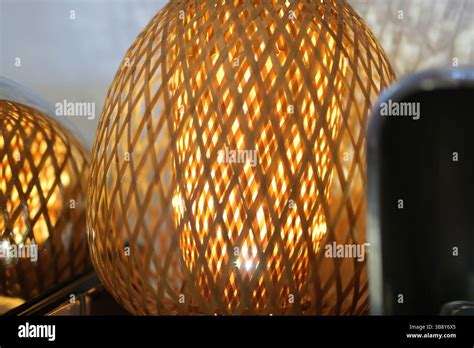
4. Do not ignore color quality: CRI matters more than many shoppers realize
Color Rendering Index, or CRI, tells you how well the light helps colors look natural. DOE says a CRI of 80 or higher is acceptable for most indoor residential use, and 90 or higher indicates excellent color fidelity. This matters a lot with bamboo because the charm of the fixture depends on warm, natural texture. A low-quality bulb can make the shade look flat, dusty, or dull.
Think of CRI like clean window glass. The view may still be there with dirty glass, but it does not look as alive. If you care about skin tones, wood tones, woven texture, or food looking appetizing on a dining table, try to buy CRI 90+.
5. Match the fixture size to the room and furniture
A bamboo light can look airy in a product photo and massive in your actual room. This is the most common visual mistake. Because woven shades have visible volume, they often look bigger than solid metal shades of the same diameter. If your room is small, you want the light to read as texture, not as an obstacle.
Simple formula 2: 3-year ownership costReal cost = fixture price + bulb cost over 3 years + install costExample: a $180 bamboo pendant + one $8 LED bulb + $70 install = $258 real starting cost.
This formula sounds basic, but it saves people from a classic mistake: thinking two lights are comparable when one needs special bulbs, an electrician visit, or a new dimmer. DOE recommends using LED fixtures or LED-compatible products in frequently used spaces, especially fixtures that run more than 2 hours a day.
For size, use these practical rules of thumb:
Above a dining table, the shade should feel clearly smaller than the table width, so it frames the table instead of swallowing it.
In a small bedroom or entry, an open-weave medium pendant often looks lighter than a tight-weave drum.
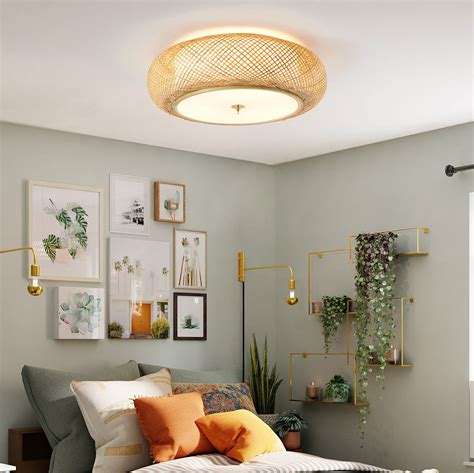
With low ceilings, a flush or semi-flush bamboo fixture is often safer than a long drop pendant.
| Space | What usually works best | What often goes wrong | Quick fix |
| Small apartment dining nook | One open bamboo pendant | Shade too wide for table | Choose a narrower, more open weave |
| Living room | Statement bamboo pendant plus lamp | Only one overhead light | Add floor or table lamp for layers |
| Bedroom | Softer 2700-3000K light | Bulb too cool and glaring | Switch to warmer LED |
| Covered patio or humid entry | Damp-rated fixture | Indoor-only fixture warps or fails | Buy a fixture marked for damp use |
6. Check moisture rating, certification, and dimmer compatibility before checkout
This step is not glamorous, but it saves real headaches. UL guidance distinguishes among dry, damp, and wet locations. A damp location can be exposed to condensation or periodic moisture, while wet-rated products are meant for direct weather exposure. If you want a bamboo light in a bathroom, near an entry that gets humid air, or on a covered balcony, do not guess. Check the product marking.
Also verify certification. UL’s Product iQ database exists specifically so users can verify certification details, and ENERGY STAR emphasizes checking product compatibility details for dimmers and special installations. If your bamboo light will be dimmed, read the fixture or bulb compatibility note. ENERGY STAR warns that not every LED works well with every dimmer, and existing dimmers are a frequent source of flicker and hum.
Key takeaway: a beautiful bamboo light in the wrong environment is like wearing suede shoes in heavy rain. It may survive for a while, but it is the wrong tool for the job.
7. Pay attention to safety history and maintenance reality
Lighting fixtures do get recalled. CPSC’s recalls database is updated regularly, and recent chandelier recalls involved fixtures detaching or posing impact hazards. That does not mean bamboo lights are unsafe by nature. It means ceiling fixtures deserve a little seriousness. If the product is heavy, extra-large, or going over a table where people sit often, check the brand’s recall history, inspect the canopy hardware, and do not treat installation as an afterthought.
Maintenance matters too. Open weaves collect less visible dust than tight, layered lattice designs, but they still need occasional cleaning. If you hate household upkeep, choose a simpler weave. That sounds minor, yet it changes long-term satisfaction more than shoppers expect.
Three real-life ways to choose the right bamboo light
Scenario 1: You live in a small rental apartment and want one light to make the dining corner feel special
You probably want a pendant that looks warm and inviting at night but does not dominate the room during the day. In this case, choose an open bamboo weave, about the visual size of a medium basket rather than a giant sculptural dome. Aim for about 800 to 1,600 total lumens depending on how much other light the room gets, and use a 3000K LED with CRI 90+ if possible. If your ceiling box is old, make sure the hardware is included and the shade weight is clearly stated.
Scenario 2: You want a bamboo light above your dining table for dinners, homework, and weekend coffee
This is the sweet spot for bamboo. You can go warmer, like 2700K to 3000K, and use dimming so the same fixture works for bright lunch, relaxed dinner, and evening ambiance. But do not under-buy brightness. A dining table is not only for mood; people also read menus, help children with homework, and sort groceries there. A dimmable fixture with enough lumen headroom is much more useful than a fixed low-output decorative pendant.
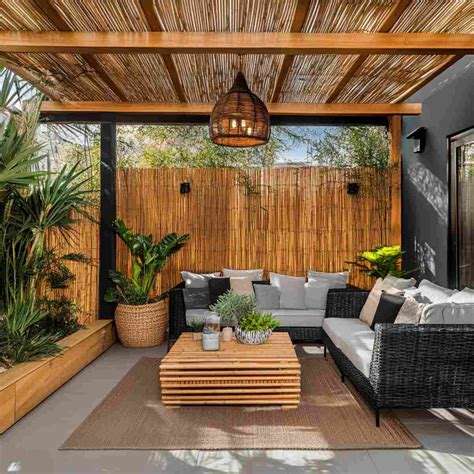
Scenario 3: You want the “natural resort” look in a covered outdoor area
This is where people most often get burned by looks-first shopping. The photo may show a woven shade on a pretty patio, but you need to verify whether the actual fixture is marked for damp or wet location use. If not, skip it. Humidity, temperature changes, and airflow can shorten life or damage the electrical parts even if the shade itself looks okay for a while.
Three common confusions, cleared up fast
Confusion 1: “A bigger shade gives more light.”Not necessarily. Light output depends mainly on the bulb or integrated LED system, while the shade shape can either spread or block that light. A large dense weave may actually feel dimmer than a smaller open design.
Confusion 2: “Natural material means eco-friendly enough.”Not automatically. Bamboo has real sustainability strengths and is highlighted by global climate and development bodies for its fast growth and substitution potential, but the full product still includes finishes, adhesives, metal parts, packaging, shipping, and electrical components. Look at the whole fixture, not just the buzzword.
Confusion 3: “Warm light is always best with bamboo.”Warm light is usually flattering, yes, but “too warm” can feel dull in work-heavy rooms. If the room needs clarity as well as mood, 3000K to 3500K can be a better balance.
Three relatable mistake stories, and how you avoid them
Mistake story 1: The gorgeous giant shade.You order a dramatic bamboo pendant because it looked airy online. When it arrives, it blocks sightlines across the table and makes the whole room feel lower. Why it failed: the visible volume of woven shades is easy to underestimate. How to avoid it: tape the diameter on the ceiling and wall before buying, and compare it to your table width and walking path.
Mistake story 2: The cozy-but-useless light.You install a warm bamboo fixture in the living room, then realize you still cannot read, fold laundry, or help your child with homework at night. Why it failed: one decorative ambient light was asked to do a task light’s job. How to avoid it: treat bamboo overhead lighting as one layer and add a floor lamp or table lamp where work happens. DOE specifically recommends matching light amount and quality to the task and adding task lights where needed.
Mistake story 3: The flicker problem.The new LED bulb says “dimmable,” but the light buzzes or jumps instead of dimming smoothly. Why it failed: the old wall dimmer and the new LED are not compatible. How to avoid it: check the bulb or fixture maker’s recommended dimmer list before purchase. ENERGY STAR explicitly warns that not every LED works well with every dimmer.
How much money and hassle can the right choice save?
DOE says residential LEDs, especially ENERGY STAR rated products, use at least 75% less energy and can last up to 25 times longer than incandescent lighting. DOE also notes good-quality LED products commonly offer useful life in the 30,000 to 50,000 hour range or more, depending on product type and quality. In other words, the right bulb or integrated LED choice can cut both your running cost and the annoyance of frequent replacement.
For everyday buyers, the real benefit is not only the utility bill. It is fewer ladder moments, fewer “why is this bulb dead again?” errands, and more confidence that your fixture will keep the room feeling the way you intended.
| Everyday situation | Weak choice | Smarter choice | Likely result |
| Light used 3-5 hours daily | Cheap decorative bulb | ENERGY STAR LED | Lower energy use and fewer replacements |
| Dining area with multiple uses | Low-output single bulb | Dimmable higher-lumen LED | Better flexibility from lunch to dinner |
| Humid entry or covered porch | Dry-rated fixture | Damp-rated certified fixture | Lower failure risk |
| Color-sensitive room | Low-CRI bulb | CRI 90+ bulb | Better skin and material color |
A quick buying checklist for different kinds of people
If you are a renter: favor easy-install shades, standard bulb bases, and moderate sizes. You want something that upgrades the room without making move-out painful.
If you are a homeowner doing a long-term upgrade: pay more attention to certification, dimming, LED quality, and hardware strength. Your best value may be a higher-quality fixture you keep for years.
If you have children: avoid low-hanging pendants in active pathways and check recall history more carefully. Ceiling fixture safety is not the place to be casual. :contentReference[oaicite:18]{index=18}
If you hate maintenance: skip very intricate weaves. Choose a simpler pattern that you can dust quickly with a microfiber cloth or soft brush.
6 useful links that genuinely help you shop better
Wikipedia’s bamboo overview — a quick, simple starting point if you want to understand what bamboo is, where it is used, and why it is valued as a light, strong natural material.
U.S. Department of Energy LED Lighting guide — a practical, consumer-friendly page explaining why LEDs use less energy, last longer, and make sense for everyday home lighting.
DOE Lighting Principles and Terms — an easy reference for color temperature, CRI, ambient lighting, task lighting, and other words that matter when you compare fixtures.
FTC Shopping for Light Bulbs advice — a very clear guide to lumens, wattage, and the Lighting Facts label so you can compare bulbs without guesswork.
ENERGY STAR light fixtures page — useful for color temperature ranges, dimmer compatibility tips, and the basics of choosing efficient, certified fixtures.
U.S. CPSC Recalls page — a practical safety check before buying from a new or unfamiliar lighting brand, especially for hanging fixtures.
The bottom line: how to buy the right bamboo light without overthinking it
Here is the simplest version. First, decide the job: ambient, task, or accent. Second, match the brightness in lumens, not just watts. Third, pick a color temperature that suits the room, usually 2700K to 3000K for cozy spaces and up to 3500K if the room needs more visual clarity. Fourth, check CRI, aiming for 80+ at minimum and 90+ if appearance matters. Fifth, confirm the fixture is the right size for your room and furniture. Sixth, verify dry, damp, or wet rating, plus certification and dimmer compatibility. Seventh, do a fast safety and maintenance reality check.
If you follow those seven steps, you avoid the biggest bamboo-light regrets: too dim, too big, too fussy, or wrong for the environment. And that is really the whole point of a good buying guide. You are not just buying décor. You are buying a daily experience. The right bamboo light makes the room softer, warmer, and easier to live in. The wrong one just gives you another thing to fix.
Final takeaway: choose the bamboo light that fits your life first and your inspiration board second. When the fit is right, the style feels even better.
Source notes
Key factual points in this guide were cross-checked against current consumer and official resources, including recent U.S. Department of Energy consumer pages updated in March 2026 and late March 2026, recent FTC consumer guidance from March 2026, current ENERGY STAR product guidance, recent CPSC recall resources, and current UNFCCC bamboo material information. Specific examples include DOE on LED energy savings and lifespan, FTC on lumens versus watts, DOE and ENERGY STAR on color temperature and CRI guidance, UL on certification lookup tools, and CPSC on recall monitoring.