
Which Direction Should a Ceiling Fan Spin in Autumn?
7-second answer 🍂: In most homes, your ceiling fan should spin clockwise on low speed in autumn once you start using heat or notice warm air collecting near the ceiling. That gentle updraft helps move trapped warm air back down along the walls so the room feels more even and comfortable. But autumn is a transition season, so on warmer days you may still prefer the summer setting until heating becomes part of your routine.
If you have ever stood in your living room in October or November and thought, “Why do my feet feel cool while my head feels warm?” you are dealing with a very normal autumn problem: warm air rises. A ceiling fan cannot create heat, but it can move heat that is already in the room. That is why fan direction matters so much in autumn. Used the right way, the fan helps smooth out the temperature difference between the ceiling and the floor instead of blowing a chilly breeze straight at you.
This article gives you a direct answer, shows you exactly how to check the right setting, explains when not to switch yet, and helps you avoid the most common mistakes people make every autumn. You will also get simple formulas, room-by-room examples, practical tables, and trusted links you can use right away.
Why clockwise usually wins in autumn
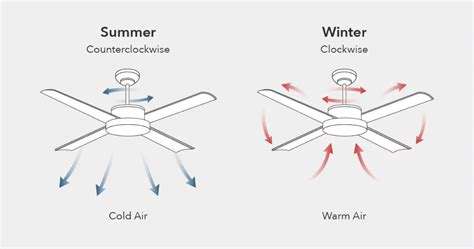
The basic idea is simple. In cooler months, official energy guidance says to run a ceiling fan clockwise at low speed. That setting creates a gentle updraft. Instead of pushing air directly down onto you, the fan pulls air upward near the center and encourages warm air near the ceiling to move down the walls and back into the part of the room where you actually live, sit, read, and sleep.
That is the key reason the answer is not just “clockwise,” but really “clockwise and low.” If you use a high speed in autumn, you may create a draft that feels annoying or even cold. The goal is not a blast of air. The goal is a quiet, almost invisible circulation pattern that makes the room feel less top-heavy with heat.
Think of it like stirring soup gently instead of splashing it everywhere. In autumn, you are not trying to feel wind on your skin. You are trying to mix the room more evenly.
But autumn is tricky: you do not always need to switch right away
This is where a lot of people get confused. Autumn is not full winter. Some days are cool in the morning and warm in the afternoon. So the best real-life answer is this: switch to clockwise when your goal changes from feeling a breeze to keeping warmth comfortable and even.
If your room still feels stuffy and you want air movement on your skin, you may still like the summer direction for part of autumn. If you have started using your furnace, heat pump, radiator, or central heating and the room feels warmer near the ceiling than at sofa or bed level, that is your sign to switch to clockwise on low.
| Table 1. Autumn fan direction made simple | |||
| What you notice | Best direction | Best speed | Why it helps |
| Warm afternoon, you want a breeze | Counterclockwise | Medium | Lets you feel moving air directly |
| Cool evening, heater is on | Clockwise | Low | Gently redistributes warm air from the ceiling |
| Bedroom feels chilly at bed height | Clockwise | Low | Reduces the hot-top, cool-bottom effect |
| Empty room | Either off | Off | Fans cool or comfort people, not empty rooms |
The last row matters more than many people realize. ENERGY STAR says to turn the fan off when the room is unoccupied. That small habit keeps you from paying for motion that no one benefits from.
How to tell if your fan is set correctly in under 2 minutes
You do not need to stare at the motor and guess. Use this quick check.
Stand under the fan. Turn it on at the lowest setting.
Notice what you feel. If you feel a noticeable breeze on your face or arms, it is probably in the summer-style downdraft mode.
Look up carefully from below. On many fans, clockwise means the blades move in the same direction as a clock when viewed from under the fan.
Adjust and test again. In autumn, the correct setting usually feels gentle, not windy.
This “feel test” is useful because fan models differ in blade shape and control style, but the comfort result is easy to notice. In cool-weather mode, you should not feel like the room is trying to dry your eyes or toss papers around. You should just notice that the room feels more balanced after several minutes.
Key takeaway: if you feel a strong breeze in autumn, the fan is probably too fast, in the wrong direction, or both.
Three everyday autumn scenarios that make the answer obvious
Scenario 1: Your living room looks cozy, but your feet are cold.You are watching TV in the evening. The thermostat says the room is fine, but the space feels uneven. This is a classic case for clockwise on low. The warm air that drifted upward during the day gets mixed back into the occupied zone, so the room feels less patchy from ceiling to floor.
Scenario 2: Your bedroom feels stuffy at 4 p.m. but chilly at 10 p.m.Early autumn often flips like this. In the afternoon, you may still enjoy the summer-style breeze. At night, once outdoor temperatures drop and you want warmth to stay more even around the bed
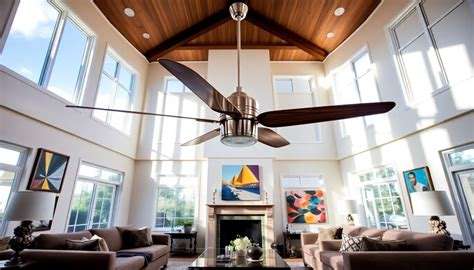
Scenario 3: You have high ceilings and the room always feels wasteful.High ceilings make warm-air stratification more obvious. Heat rises and collects overhead, which can make the lower part of the room feel cooler than it should. A gentle clockwise setting helps pull that trapped warmth back into circulation. This does not magically create heat, but it does help you make better use of heat you already paid for.
| Table 2. Real-life autumn results by room | |||
| Room | Best autumn setup | What you usually feel | Common mistake |
| Living room | Clockwise, low | More even comfort across sofa and floor | Running high speed and creating a draft |
| Bedroom | Clockwise, low | Less “cold feet, warm head” feeling | Leaving summer mode on all night |
| Home office | Depends on body comfort | Breeze if warm; even warmth if cool | Ignoring midday temperature changes |
| Entry with high ceiling | Clockwise, low | Less trapped heat at the top | Assuming direction does not matter |
Why this works in plain language
Warm air naturally rises. That is not just a school-science phrase; you can feel it in real life every autumn. The upstairs room is warm first. The top shelf is warmer than the floor. The ceiling area often holds a pocket of heat that does not help you much while you are sitting, eating, reading, or trying to sleep.
When your fan spins clockwise on low, it does not blast warm air down the middle of the room. Instead, it nudges air in a way that helps redistribute that warm layer. The room becomes more even, and that means comfort can improve without always pushing the thermostat higher.
That same principle is why the summer answer is different. In summer, you want the fan to create a wind-chill effect so you feel cooler. The Department of Energy says ceiling fans can allow you to raise the thermostat by about 4°F without reducing comfort in cooling season. Autumn is different because your goal shifts from “make me feel breezy” to “help the room feel evenly warm.”
Two simple formulas that help in real life
Formula 1: Daily fan running costDaily cost = (Fan wattage ÷ 1000) × Hours used × Electricity rate
Example: if your ceiling fan uses 35 watts, you run it for 8 hours, and your electricity rate is $0.15 per kWh, then:(35 ÷ 1000) × 8 × 0.15 = $0.042 per day, or a little over 4 cents.
This formula is useful because it helps you compare the tiny cost of smart fan use with the comfort gain you get from better heat distribution. It also reminds you why leaving a fan on in an empty room is unnecessary: even a low cost is still wasted if no one is benefiting.
Formula 2: Weekly wasted cost from running the fan in an empty roomWeekly waste = Daily cost × Empty-room days
Example: using the same $0.042 daily cost, if you leave the fan running in an unused guest room for 7 days, then:0.042 × 7 = $0.294 wasted in one week.
That may not sound huge, but the point is habit. If you do this in several rooms through the whole cool season, the waste adds up while delivering no comfort at all. ENERGY STAR’s advice to switch fans off in unoccupied rooms is simple for a reason: it works.
Three common autumn mistakes that make people think ceiling fans “do not work”
Mistake story 2: “I left it on all day to warm the room faster.”A fan does not heat the room by itself. It moves air. If the room is empty, you are not gaining comfort; you are just using electricity. Turn it on when the room is occupied and your goal is better comfort, not because you expect the fan alone to act like a heater.
Mistake story 3: “Autumn started, so I switched every room immediately.”This is too rigid. Early autumn can still feel warm in kitchens, offices, and sun-facing rooms. The better approach is room-by-room and day-by-day. Ask yourself: do you want a breeze, or do you want gentle redistribution of warmth? That one question usually tells you which direction is right.
Key takeaway: direction matters, but direction + speed + room use matter even more.
What to do if your fan has a remote, wall control, or no obvious switch
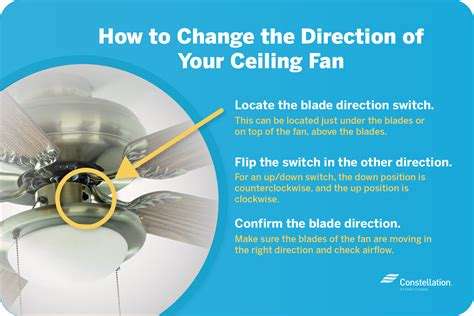
Older fans often have a small reverse switch on the motor housing. Newer models may hide the direction control on a remote or wall unit. If you cannot find it, check the manual or the maker’s product page. This is one reason many shoppers care about adjustability when comparing fans. Consumer Reports evaluates ceiling fans on factors such as airflow, noise, and adjustability, which is helpful if you are buying a fan for year-round use rather than just summer cooling.
If your fan is very old and seems confusing, do not force a switch. Some older fans are not reversible in the same easy, electrical way many current models are. A quick manual check can save a lot of frustration.
Safety checks that matter more in autumn than people expect
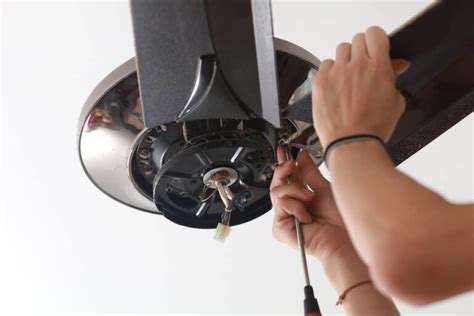
Autumn is when many people start using ceiling fans differently again after months of summer habits. That makes it a good time for a quick inspection. Look for wobble, unusual clicking, loose blades, or a noisy motor. If your model has ever been recalled, stop using it and follow the official instructions. The U.S. Consumer Product Safety Commission keeps a searchable ceiling fan recall page, which is one of the most practical links you can save.
If you are replacing a light fixture with a fan, make sure the electrical box is rated to support a ceiling fan. Consumer Reports also advises proper installation height, noting that a fan should be at least 7 feet above the floor, with 8 to 9 feet preferred if ceiling height allows. That is not just about airflow; it is also basic safety and comfort.
If you are shopping for a fan this autumn, what matters most?
If your main goal is better comfort in both warm and cool weather, look for three things: reversible operation, easy controls, and high efficiency. ENERGY STAR says certified ceiling fans can be up to 44% more efficient than conventional models because of improved motors and blade designs. That does not mean every efficient fan will feel identical, but it does mean certification is a useful shortcut when you want better performance without digging through technical specs for an hour.
Also think about your daily life, not just the showroom. If you switch seasons often, a remote reverse feature is more convenient than climbing onto a chair to reach the motor housing. If the fan is in a bedroom, low-noise performance matters. If it is in a large family room, stable low-speed circulation matters more than maximum dramatic airflow.
| Table 3. What to compare if you use a fan year-round | |||
| Feature | Why it matters in autumn | Easy choice | Watch out for |
| Reverse control | You will switch modes with the seasons | Remote or wall reverse | Hard-to-reach manual switch |
| Low-speed quality | Autumn comfort needs gentle airflow | Stable, quiet low speed | Low mode that still feels drafty |
| Efficiency | Helps year-round operating value | ENERGY STAR certified | Buying on looks alone |
| Noise | Important in bedrooms and offices | Reviewed for quiet operation | Motor hum or rattling blades |
Six trusted links you can actually use
ENERGY STAR ceiling fan installation and usage tips — a practical official guide that explains clockwise winter use, summer use, and why turning the fan off in an empty room matters.
U.S. Department of Energy fan guidance — an easy-to-read page on fan direction, year-round comfort, and the well-known cooling-season thermostat guidance.
ENERGY STAR certified ceiling fans — a useful place to understand efficiency claims and start narrowing down better-performing models.
U.S. Consumer Product Safety Commission ceiling fan recalls — check here if your fan wobbles, clicks strangely, or you want to verify that your model has not been recalled.
Consumer Reports ceiling fan reviews — a practical buying resource focused on airflow, noise, and adjustability.
Wikipedia’s ceiling fan overview — a convenient background page if you want a quick refresher on how reversible fans work and why direction changes by season.
Clear answers to 5 common questions people ask every autumn
1. Should your ceiling fan spin clockwise or counterclockwise in autumn?Usually clockwise on low, especially once heating begins or warm air collects near the ceiling. That is the most useful everyday answer.
2. Can the “wrong” direction make the room feel colder?Yes. If the fan is pushing a breeze straight down on you during cool weather, your skin can feel chilled even if the room is not truly colder. That is why autumn complaints often come down to the wrong direction or too much speed.
3. Does a ceiling fan lower the room temperature?No. Fans move air; they do not directly cool or heat the air itself. What changes is your comfort and the air distribution inside the room.
4. Is autumn the same in every climate?Not at all. In milder climates, you may switch later or move back and forth between settings. In cooler climates, the change to clockwise may happen earlier and stay in place longer.
The bottom line
If you want the simplest possible answer to the question in the title, here it is again: your ceiling fan should usually spin clockwise on low speed in autumn once your comfort goal shifts from cooling to keeping warmth evenly distributed. That is the setting that helps move warm air gathered near the ceiling back into the living space instead of wasting it overhead.
The most useful skill is not memorizing one fixed seasonal rule. It is learning to read the room. If you want a breeze, use the cooling setup. If you want even warmth, use the autumn-and-winter setup. Keep the speed low, turn the fan off in empty rooms, and do a quick safety check before the cool season settles in. Small change, big difference — and yes, it really is easy to do.
If you test the direction tonight and the room feels more balanced within a few minutes, you will know you got it right. That is the nice thing about this autumn fix: no complicated tools, no expensive upgrade, and no guesswork once you understand what the fan is supposed to do.