
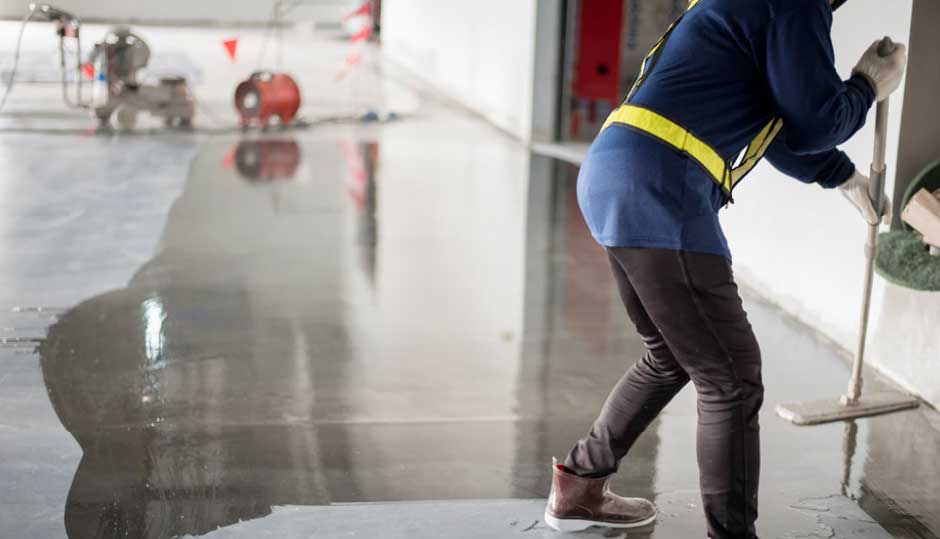
The Role of Industrial Concrete Coatings in Safety and Compliance
Industrial floors take a beating. Heavy forklifts, spilled chemicals, constant foot traffic, and shifting loads all conspire to degrade plain concrete — and each failure mode is a potential safety or compliance problem. Properly specified and maintained concrete coatings aren’t just cosmetic: they’re a frontline control that protects workers, reduces liability, and helps facilities meet regulatory requirements. Below is a clear, practical guide to why coatings matter and how to choose them with safety and compliance top of mind.
Why coatings are more than “pretty floors”
A quality industrial coating turns untreated concrete into a managed surface. Coatings reduce surface wear and dusting, provide chemical and moisture barriers, allow for color-coding and visual controls, and create predictable traction characteristics. Those functional changes do real work: they reduce slip-and-fall risk, prevent contaminant migration into the slab, make cleaning easier (critical for hygienic industries), and enable safety markings that help organize workflows. In short: coatings translate facility policy into a physical, enforceable floor system.
Safety benefits that matter (and the standards behind them)
Slip resistance is the most obvious safety win. Specifying the right surface texture and testing for coefficient of friction are essential steps to reduce falls; recognized test methods such as the static coefficient of friction test are used to verify floor performance.
Coatings also reduce trip hazards by preventing spalling and progressive surface failure. They make floors easier to clean and quicker to dry — both important controls under OSHA’s walking-working surfaces and housekeeping requirements, which require employers to keep floors in safe condition and free of hazards.
For facilities that handle liquids, oils, or aggressive chemicals, the right coating prevents migration into the concrete (which is costly and hazardous). In environments where sanitation is critical — food processing, beverage, and pharmaceutical plants — seamless, impervious coatings are an accepted part of meeting hygienic design and food safety guidelines. The FDA Food Code and related agency guidance emphasize smooth, cleanable surfaces in food handling areas.
Compliance considerations: regulations you can’t ignore
Several regulatory angles intersect with floor selection:
- Workplace safety (OSHA): Employers must maintain walking-working surfaces and take measures to prevent slips, trips, and falls. Documentation of inspection, maintenance, and repairs can be part of compliance.
- Food safety (FDA/USDA): Where food is processed or prepared, surfaces must support sanitation programs; smooth, non-porous coatings simplify cleaning and reduce contamination risk.
- Environmental (EPA): Many coating products are subject to VOC regulations and labeling requirements; selecting low-VOC formulations can simplify compliance and reduce indoor air concerns during application and cure.
- Electrostatic-sensitive operations (ANSI/ESD): Electronics and some medical manufacturing operations require ESD-control flooring or coatings that meet program requirements for static dissipation. Standards and program guidance exist to validate ESD flooring solutions.
Understanding which regulations apply to your operation narrows the field of acceptable products and defines performance metrics for procurement and testing.
Choosing the right coating for safety & compliance
Not all coatings are interchangeable. Here are common families and the compliance strengths they bring:
- Epoxy: Excellent chemical resistance and abrasion performance; widely used in warehouses and manufacturing. Good for many food-adjacent areas when formulated and installed per sanitary guidelines.
- Polyurethane (aliphatic): More UV-stable and flexible than many epoxies; useful where color stability and surface resilience matter.
- Polyaspartic / Polyurea: Fast cure times, durable, and often used where minimal downtime is critical.
- Specialty systems: Anti-slip broadcast systems, antimicrobial formulations for food/medical spaces, and ESD coatings for electronics all exist — specify these where the regulatory or operational profile requires them.
When specifying, require manufacturer data sheets, third-party test results (slip resistance, chemical resistance, VOC content), and references from similar facilities. Don’t accept “good enough” language — require measurable performance tied to your compliance needs.
Maintenance, inspections, and lifecycle compliance
A coating is only as compliant as its condition. Establish a floor-inspection regime that checks for wear, delamination, chemical attack, and loss of slip properties. Clean using methods compatible with the coating (some aggressive cleaners degrade certain chemistries). Plan scheduled recoats before the surface reaches failure thresholds — this preserves safety performance and avoids emergency shutdowns or regulatory scrutiny.
Document inspections, cleaning procedures, and maintenance work so you can demonstrate due diligence to auditors, insurers, or regulators.
Business benefits beyond compliance
Beyond avoiding fines and preventing injuries, coatings deliver measurable operational value: fewer lost workdays, lower cleaning and repair costs, improved product quality (less dust/contamination), and higher worker morale in safer, better-lit areas. For customer-facing facilities, a coated floor signals professionalism and care — a small investment that lowers long-term total cost of ownership.
Practical next steps
- Audit your high-risk areas (wet zones, high-traffic aisles, chemical storage, food prep lines).
- Identify the critical performance attributes (slip resistance, chemical resistance, ESD, low VOC).
- Request product data, third-party test reports, and installation references from suppliers.
- Build inspection and maintenance schedules into your safety program.
- Engage a coatings specialist early — proper surface prep and installation are as important as product selection.
Bottom line: Industrial concrete coatings are an economical, high-impact control for both safety and compliance. When selected and maintained with regulatory requirements in mind, coatings turn a vulnerable, uncontrolled surface into a managed asset that protects workers, supports inspections, and reduces operational risk. If you’d like, I can help you draft an inspection checklist tailored to your facility type (warehouse, food plant, or electronics assembly) or a short RFP template to solicit compliant coating proposals.