
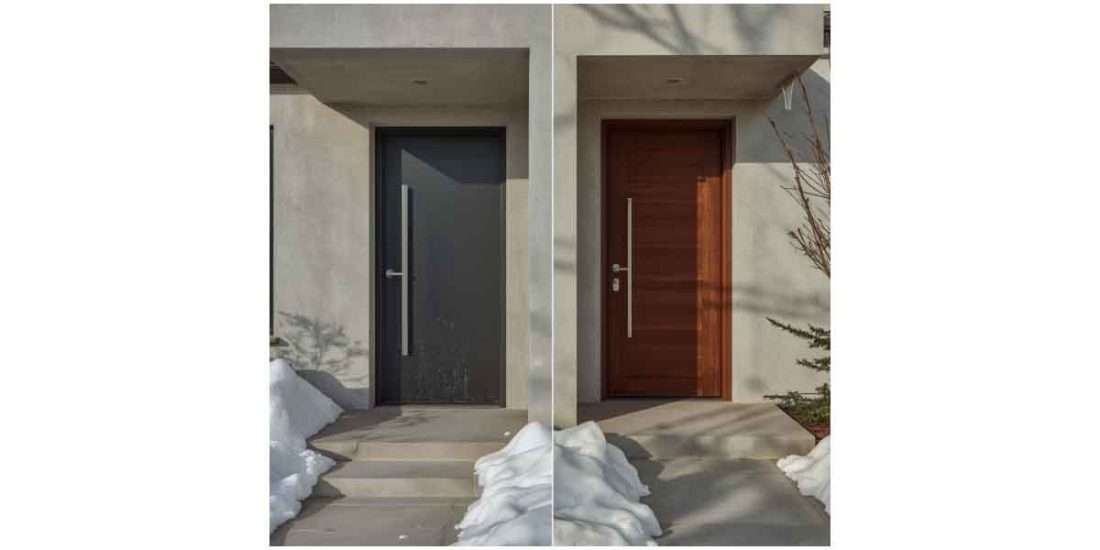
Steel vs. Fiberglass: Which Front Door Material Actually Survives a GTA Winter?
Shopping for new front doors in the Greater Toronto Area feels like preparing for battle against the elements, and honestly, that’s not far from the truth. When you’re staring down minus-thirty windchills, ice storms that turn your porch into a skating rink, and summer humidity that makes everything swell like a sponge in bathwater, choosing between steel and fiberglass for new front doors isn’t just about aesthetics or budget. It’s about selecting a material that won’t betray you when Jack Frost decides to throw his worst tantrum or when August turns your entryway into a sauna. The question isn’t which material looks prettier in the showroom under flattering lighting, but which one will still be functioning flawlessly after five brutal Canadian winters.
Let’s be honest: most homeowners approach door shopping with the same enthusiasm they’d have for buying insurance. Yet choosing the right exterior door for extreme weather conditions might be one of the smartest investments you’ll make for your home. After all, your front door is basically a security guard, insulation blanket, and aesthetic statement piece all rolled into one. According to This Old House, homeowners in cold climates can see energy savings of 15-20% annually just from upgrading to a properly insulated, weather-resistant entry door. That’s real money staying in your pocket instead of leaking out around a poorly performing door.
The Steel Door Reality Check
Steel doors have that reputation of being the tough guys of the entry door world, and for good reason. They’re basically the armored tanks of home security. If someone’s trying to kick in your door at 2 AM, you want steel between them and your family. The strength factor is undeniable. Steel doors resist forced entry better than just about any other material, and in neighborhoods where security matters, that peace of mind is priceless.
But here’s where the plot thickens for GTA homeowners. Steel’s Achilles heel is rust. Not might rust, not could rust, but will eventually rust if you’re not vigilant about maintenance. Think of steel doors like classic cars: gorgeous when properly maintained, but they demand regular attention. Every scratch, every paint chip, every ding from hauling in groceries becomes a potential rust invitation. And in the GTA’s winter wonderland where we liberally salt everything within a five-kilometer radius of any road, that road salt becomes enemy number one.
The rust issue starts invisibly, forming inside the door where you can’t see it. By the time rust appears on the exterior surface, the damage has already compromised the door’s core. It’s like finding termites in your walls after they’ve been there for months. Steel door owners need to commit to annual maintenance: cleaning with mild detergent, touching up paint chips immediately, applying protective coatings, and basically treating their door like it needs a spa day at least once a year.
The Cold Hard Truth About Thermal Bridging
Here’s something showroom sales associates often conveniently forget to mention: steel conducts heat like a champ, which is exactly what you don’t want in a door. Even insulated steel doors with polyurethane cores can create what’s called thermal bridging. Essentially, that steel shell becomes a highway for cold to travel from outside to inside, no matter how much foam insulation sits between the metal layers.
On a bitter January morning when it’s negative twenty outside, your steel door can become noticeably cold to the touch on the interior side. It’s not catastrophic, but it’s definitely noticeable. Some homeowners report actually feeling cold air radiating from their steel doors during extreme cold snaps, which feels counterintuitive when you’ve just invested serious money in an “insulated” door.
Fiberglass: The Dark Horse Contender
Fiberglass doors are like the quiet, competent employee who shows up every day and just gets the job done without drama. They don’t have steel’s security reputation or wood’s traditional prestige, but they’re remarkably good at handling everything the GTA climate throws at them.
The magic of fiberglass lies in its composite construction. It’s essentially woven glass fibers bonded with resin, creating a material that’s stable across temperature swings that would make other materials freak out. While steel expands and contracts with temperature changes and wood swells and shrinks with humidity fluctuations, fiberglass just sits there being chill about the whole situation.
No rust. No rot. No warping under normal conditions. Fiberglass doors laugh at moisture, shrug off humidity, and handle freeze-thaw cycles without batting an eye. For GTA homeowners who don’t want to think about door maintenance every season, this low-drama approach is incredibly appealing.
The Energy Efficiency Champion
Here’s where fiberglass really shines: thermal performance. Fiberglass is non-conductive, meaning it doesn’t transfer heat or cold the way metal does. Combine that property with a polyurethane foam core, and you’ve got an entry door that acts like a legitimate insulation barrier. The R-values on quality fiberglass doors typically range from 5 to 6, compared to 4 to 5 for steel doors. That might sound like a tiny difference on paper, but over a brutal six-month heating season, it adds up.
Homeowners consistently report that fiberglass doors feel warmer to the touch on the interior side during winter. There’s no cold spot radiating into your foyer, no condensation forming around the door frame, and no drafts sneaking through micro-gaps created by thermal expansion and contraction. Your furnace isn’t working overtime to compensate for heat loss through the entry door.
The Dent and Damage Dance
Both materials handle physical abuse differently, and understanding these differences matters when you’re hauling Christmas trees, moving furniture, or dealing with enthusiastic delivery drivers who treat your door like a boxing opponent.
Steel doors are extremely dent-resistant under normal circumstances, but when they do get damaged, repairs can be tricky. A significant dent often requires professional repair involving bondo, sanding, and repainting. Small dings and scratches expose bare metal, which immediately becomes a rust risk if not addressed promptly.
Fiberglass, paradoxically, is both more vulnerable and more forgiving. While fiberglass won’t dent like steel, it can crack if struck with enough force. Think of it like the difference between denting aluminum foil versus cracking glass. However, minor scratches and surface damage on fiberglass are often easier to repair with touch-up pens or matching paint, and there’s no rust countdown timer forcing you to fix problems immediately.
The Great Warping Debate
Here’s where things get interesting and slightly controversial. Quality fiberglass doors are marketed as warp-resistant, and under normal conditions, that’s accurate. The composite material remains dimensionally stable through temperature swings that would make wood doors throw tantrums.
However, fiberglass doors can warp under specific conditions, and it’s worth being aware of these scenarios. Dark-colored fiberglass doors facing south or west, especially when paired with full-glass storm doors that trap heat, can experience warping where the top corner pulls away from the seal when the sun hits it directly. It’s not common, and it typically requires a perfect storm of factors, but it happens enough that contractors know about it.
The solution usually involves lighter colors for southern exposures, ventilated storm doors that don’t trap heat, or strategic landscaping that provides some shade during peak sun hours. Most manufacturers won’t warranty fiberglass doors installed behind full-glass storm doors for exactly this reason.
Steel doors have their own warping considerations. Improperly installed steel doors or frames that aren’t perfectly square can lead to binding, where thermal expansion causes the door to stick in its frame. It’s less about the door itself warping and more about metal expansion creating fit issues within the jamb.
The Price Tag Reality
Let’s talk money because that’s where theory meets reality for most homeowners. Steel doors win the affordability contest, typically costing 20-30% less than comparable fiberglass doors at the point of purchase. For budget-conscious renovators, that price difference matters.
However, the total cost of ownership tells a different story. Factor in the maintenance requirements for steel (annual cleaning, periodic repainting, rust treatment), and the gap narrows considerably over the door’s lifespan. Fiberglass doors essentially install-and-forget, requiring minimal maintenance beyond occasional cleaning.
Think of it like comparing a budget car that needs frequent repairs versus a slightly pricier vehicle with better reliability ratings. The upfront savings on steel doors can evaporate over five or ten years if you’re repainting, treating rust, or dealing with early replacement due to corrosion.
Security Showdown
This is where steel traditionally dominated, and to be fair, steel doors still offer superior forced-entry resistance. The metal construction simply handles battering better than fiberglass can. For homeowners in higher-crime areas or anyone who prioritizes maximum security above all else, steel’s toughness remains unmatched.
That said, modern fiberglass doors with reinforced cores, steel plates at lock points, and multipoint locking systems provide excellent security for most residential applications. Unless you’re genuinely worried about determined intruders with battering rams, a quality fiberglass door with proper hardware will keep your home secure.
The Aesthetic Question
Both materials offer impressive customization options, but they achieve aesthetics differently. Steel doors typically feature embossed panel designs and come in various colors through painted finishes. They look clean, contemporary, and intentionally modern.
Fiberglass’s party trick is mimicking wood grain so convincingly that guests often can’t tell the difference. Modern compression molding creates realistic oak, mahogany, or cherry textures that can be stained to achieve authentic wood appearance without wood’s maintenance headaches. For homeowners who love traditional aesthetics but want modern performance, fiberglass delivers that sweet spot.
Making the Call for Your Home
After diving deep into both materials, here’s the honest assessment: for most GTA homeowners, fiberglass edges ahead as the better long-term choice for front entry doors. The combination of superior insulation, minimal maintenance, moisture resistance, and dimensional stability makes it the more practical option for our climate’s extremes.
Steel doors make perfect sense for secondary entries, garage access doors, and situations where security is the overriding priority. They’re also excellent when budget constraints are tight and you’re willing to commit to regular maintenance.
Choose steel if you prioritize maximum security, want the lowest upfront cost, don’t mind annual maintenance routines, and appreciate contemporary aesthetics.
Choose fiberglass if you value energy efficiency, prefer minimal maintenance, want wood-look aesthetics, plan to stay in your home long-term, and can accommodate the higher initial investment.
Either way, proper installation matters enormously. A perfectly manufactured door installed poorly will perform terribly, while a mid-range door installed expertly will exceed expectations. Invest in experienced installers who understand weatherproofing, use quality weatherstripping, and take time to ensure everything is properly sealed and aligned.
Your front door works harder than just about any other component of your home, facing every weather extreme while providing security, insulation, and first impressions. In the GTA’s climate roller coaster, choosing the right material means the difference between a door that’s still going strong after a decade and one that’s showing serious wear after just a few seasons.