
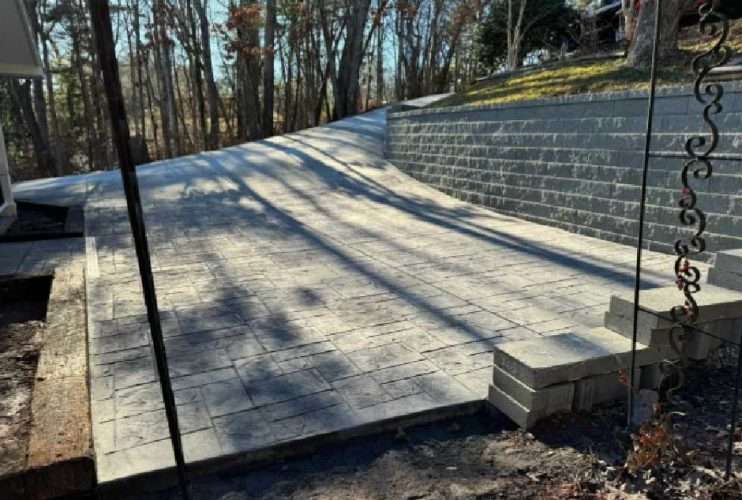
Decorative Concrete That Looks Custom, Costs Less
Decorative concrete makes plain surfaces look like stone, tile, or wood without spending a lot. It works well for patios, driveways, walkways, and even indoor floors. It is strong, low maintenance, and easy to clean. In this post, you will learn how it works, where to use it, and how to keep it looking great without spending a lot.
What Is Decorative Concrete?
Decorative concrete is regular concrete that’s made to look better. It’s used on patios, driveways, walkways, and floors. Instead of plain gray, it can look like brick, stone, tile, or wood.
Here are the main types:
- Stamped concrete – Patterns are pressed into the concrete to make it look like brick, stone, or wood.
- Stained concrete – Color is added to change the look. Some stains give it a soft tone, others make it bold.
- Polished concrete – The surface is smoothed and shined. It’s often used indoors.
- Concrete overlays – A thin layer goes over old concrete to make it look new again.
- Exposed aggregate – Small stones are shown on the surface for texture.
These finishes work like regular concrete but look finished, stylish, and often mimic more expensive materials.
Why It Looks Custom Without the High Price
Decorative concrete looks like stone or brick but costs less.
| Material | Cost per Square Foot |
| Natural stone | $15 – $30 |
| Brick pavers | $12 – $25 |
| Stamped concrete | $8 – $18 |
| Stained concrete | $4 – $10 |
- Stamped concrete gives you the texture and look of stone or brick at a much lower cost.
- Stained concrete adds color for even less, especially if you’re starting with a good surface.
- Overlays reuse what you already have, saving even more by skipping demolition.
Labor costs stay lower too because installation takes less time and uses fewer materials.
Real Benefits for Everyday Use
Decorative concrete looks good, but it also works well for everyday life.
- Easy to Clean – No grout, no weeds. Just sweep or rinse with a hose.
- Strong – It holds up to cars, sun, rain, and foot traffic. When sealed, it lasts for years.
- Fast to Install – Most jobs take a few days. If you already have concrete, a layer can go right on top.
- Good for Many Areas – Use it on driveways, patios, walkways, garage floors, and indoor floors.
- Low Maintenance – Clean it when needed. Reseal it every few years.
Compared to tile or pavers, it needs less work and has fewer pieces that can crack or shift.
Common Problems It Can Solve
Concrete gets worn out over time, and Ready Mix Concrete Southport provides a durable solution. It cracks, stains, or starts to look bad. Decorative concrete can fix that.
- Cracks and stains
A thin overlay covers damage and gives the surface a new finish. - Slippery walkways
Stamped patterns or textured sealers add grip and help prevent slips. - Old patios or garage floors
Stains or polish can refresh the surface without replacing it. - Faded or uneven color
Stains and overlays even things out and improve the look.
If your concrete’s still structurally sound, you likely don’t need to tear it out. Just refinish it.
Many Ways to Customize It
Decorative concrete doesn’t have to look the same every time. You can choose how it looks.
- Color – Pick from gray, brown, red, or other basic colors.
- Pattern – Make it look like brick, stone, wood, or tile.
- Finish – You can make it shiny or keep it rough with texture.
- Borders – Add a border in a different color or pattern.
This gives you design freedom without going over budget.
Where You Can Use Decorative Concrete
Decorative concrete works indoors and outdoors.
It’s good for:
- Driveways – Strong enough for cars.
- Patios – Good for walking and outdoor use.
- Pool decks – Helps prevent slipping when wet.
- Basements – Make floors look clean.
- Garages – Handle cars, tools, and spills.
- Shops – This works well for lots of foot traffic.
You’ll see decorative finishes used in all kinds of concrete services, such as driveways, patios, walkways, slabs, and foundation work—especially where appearance matters just as much as strength.
How to Choose the Right Contractor
Decorative concrete needs the right person.
Ask these questions:
- Do you have photos of your work?
Look at jobs they’ve done before. - What products do you use?
Good sealers and stains last longer. Ask what they use. - Have you done decorative work before?
Not all concrete workers do this. Make sure they have. - Are you trained?
Training shows they know what they’re doing. - Can you explain the job?
They should tell you how long it takes, what it costs, and how to care for it.
Ways to Save Money Without Cutting Quality
You don’t have to spend big to get a good result.
- Use simple patterns – Basic designs are faster to install.
- Pick one color – Multicolor jobs cost more.
- Overlay old concrete – Save money by using what you already have.
- Stick with standard sealers – They last and still protect well.
- Avoid cutting too many borders – More details mean more time and labor.
Good design doesn’t have to mean expensive design.
A Smart Way to Upgrade for Less
Decorative concrete gives you a custom look for less money. It works in lots of places, holds up well, and doesn’t need constant maintenance. Simple design choices help lower costs without losing visual appeal. Just be sure to hire someone who knows the right way to do it.
Ready to upgrade your space without overspending? Decorative concrete might be the answer.