
Can a Range Hood Cause a Water Heater to Backdraft?
A powerful range hood can do more than clear smoke and cooking odors, it can also change air pressure inside the home and interfere with proper water heater venting. Whether you are planning a new range hood or a water heater installation, understanding how these systems interact can help prevent dangerous backdrafting and combustion-gas problems.
What Causes Water Heater Backdraft
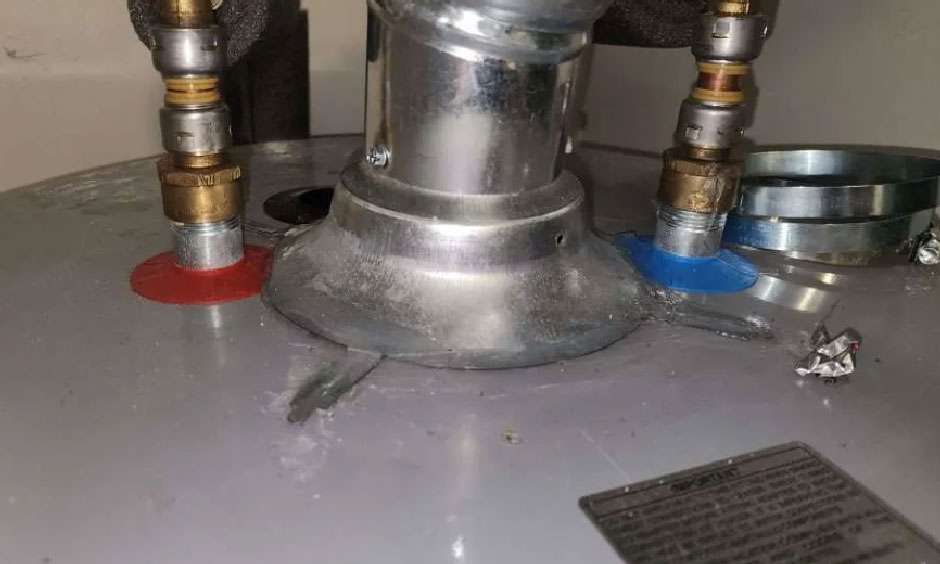
Water heater backdrafting occurs when combustion gases from a fuel-burning water heater fail to travel up the vent or chimney as intended and spill back into the home. It mainly affects natural-draft water heaters, which rely on the buoyancy of hot exhaust rather than a fan to move combustion products outdoors. With a conventional atmospheric-draft water heater, hot exhaust normally rises through the draft hood and flue because warm gases are buoyant. The draft hood is intentionally open to the surrounding room, allowing room air and combustion gases to move upward through the vent.
A water heater backdraft develops when the pressure inside the house becomes negative enough to overcome that relatively weak natural draft. If the pressure inside the house drops too far, airflow can reverse at the draft hood and pull air down the vent. The key issue is the relationship between the house and the vent. When the house is pulling air inward more strongly than the chimney is pulling exhaust upward, the water heater’s draft hood can become an unintended air inlet and allow combustion products to enter the room. The U.S. Department of Energy specifically identifies atmospheric-vent appliances as especially susceptible to this problem.
Backdrafting is often caused by several conditions working together. Strong exhaust fans, clothes dryers, bathroom fans, HVAC duct leakage, restricted combustion-air openings, and a tightly sealed house can depressurize the house, while a partially blocked, oversized, cold, or poorly configured vent may already have weak draft. Wind and outdoor temperature can also affect chimney draft. A water heater can therefore work normally much of the time and backdraft only under certain combinations of conditions. This is why water heater backdrafting can be intermittent and difficult to notice.
How Range Hoods Cause Water Heater Backdrafting
A range hood that vents outdoors removes a large volume of air from the kitchen. Every cubic foot of air leaving the house has to be replaced. If enough replacement air cannot enter through a dedicated make-up air system or normal leakage around the building, indoor pressure drops.
An atmospheric water heater connected to the home’s air can then become part of the replacement-air pathway. Air may begin traveling down the chimney or vent toward the lower-pressure house, interfering with the upward flow of the water heater’s exhaust and causing exhaust to spill into the room. DOE guidance specifically identifies kitchen exhaust fans as equipment capable of reducing pressure around a combustion appliance enough to cause backdrafting.
The water heater does not have to be near the kitchen. Pressure differences can affect connected spaces throughout the house. Running a dryer, bathroom fans, and the range hood simultaneously can make the condition more severe. A range hood that causes no problem by itself may trigger backdrafting when a clothes dryer or bathroom fan is running at the same time. This kind of water heater backdraft may appear only under those combined conditions.
Water Heater Types Prone To Water Heater Backdrafting
Conventional atmospheric-draft gas water heaters are the primary concern. These are typically tank-style units with a metal draft hood on top and a vent pipe running to a chimney or vertical gas vent.
Risk deserves additional attention when an atmospheric water heater is located inside the home’s pressure boundary, such as in a basement or utility room, shares a chimney or common vent with another appliance, has a long, oversized, poorly configured, corroded, or partially blocked vent, is in a small mechanical room with inadequate combustion air, or operates in a tightly constructed home with powerful exhaust equipment.
Direct-vent and sealed-combustion water heaters are substantially less susceptible because they obtain combustion air directly from outdoors and discharge exhaust through a dedicated venting system. Power-vented equipment uses a mechanical blower to move exhaust and is also less dependent on natural chimney draft, although installation and vent integrity remain important. Electric and heat-pump water heaters have no combustion flue, so combustion backdrafting does not apply to them.
Signs Of Backdrafting Water Heater
Backdrafting can occur without an obvious odor because carbon monoxide itself is colorless and odorless. Recognizing signs of backdrafting water heater problems therefore depends heavily on physical clues around the appliance and vent system.
Common signs of backdrafting water heater issues include soot or discoloration near the draft hood, rust or water streaking on the vent or chimney, unusual moisture or condensation, deterioration around vent connections, loose or disconnected vent components, and unusual heat damage near the top of the water heater. The CPSC lists these among visible clues associated with potential carbon-monoxide and venting problems.
Timing can provide another clue and can be one of the signs of backdrafting water heater trouble. You may notice that the problem appears when several exhaust devices are running. For example, combustion-gas spillage may occur when the range hood is on high together with the dryer or bathroom fans and disappear after those appliances are switched off.
A carbon-monoxide alarm, headaches, dizziness, nausea, weakness, sleepiness, unusual fatigue, or confusion are more serious warning signs. Treat a CO alarm or suspected CO exposure as an emergency: get everyone outside into fresh air and call 911.
How To Tell If Your Water Heater Is Backdrafting
A professional combustion-safety test provides the most reliable answer. The technician places the home into a worst-case depressurization condition by operating equipment such as the range hood, bathroom exhaust fans, dryer, and HVAC blower as appropriate. They then check the natural-draft appliance for spillage and measure carbon monoxide while it is operating. This testing can confirm water heater backdrafting under the conditions most likely to cause it. BPI’s combustion-appliance-zone testing guidance specifically includes running kitchen fans and other exhaust appliances at high settings before performing spillage and CO testing.
A technician may use a smoke pen at the draft-hood opening, a digital manometer to measure pressure relative to outdoors, and a combustion analyzer to measure flue gases. Testing after the water heater has been running for several minutes is important. A cold vent may take a short time to establish upward draft, while continued spillage after the flue has warmed points to a more significant problem. This approach can reveal a problem that does not appear when the house is sitting under normal, low-exhaust conditions.
Homeowners can sometimes identify a useful clue by noticing whether symptoms or venting problems consistently occur when the range hood or dryer operates, particularly at high speed. Opening a nearby exterior door or window and seeing the condition change can also point toward a pressure-related problem. If venting improves quickly when additional outdoor air is introduced, the house may have a replacement-air or depressurization problem. That observation does not establish that the appliance is safe, and leaving a window open should not be treated as the permanent solution.
A household CO alarm also cannot confirm proper drafting. Its purpose is to warn occupants when dangerous carbon-monoxide conditions develop. CPSC recommends CO alarms on every level of the home and outside sleeping areas.
Risks Of Water Heater Backdraft
The most serious concern is the entry of combustion products into occupied space. Fuel-burning appliances generate exhaust containing water vapor and pollutants, and improperly operating combustion can produce dangerous carbon-monoxide concentrations. DOE identifies carbon monoxide, water vapor, and nitrogen oxides among the important combustion by-products that can create indoor problems.
Carbon-monoxide exposure can cause headache, dizziness, nausea, weakness, confusion, unconsciousness, and death at sufficiently high exposure levels. Backdrafting can also reduce indoor air quality by introducing nitrogen oxides, particles, and other contaminants into occupied rooms.
Flue gases also contain water vapor. Repeated spillage can increase moisture around the appliance and contribute to condensation on cooler surfaces, corrosion of vent components and metal connectors, and deterioration of nearby materials. DOE notes that persistent moisture can promote mold growth and deterioration of building materials.
Poor draft and inadequate combustion air can also interfere with stable combustion and increase the possibility of additional combustion problems.
How To Fix Backdrafting Water Heater
The repair should address the source of the pressure or venting problem behind the water heater backdraft. A qualified HVAC, plumbing, or combustion-safety professional should inspect the complete system rather than treating the draft hood alone. The repair depends on whether the main problem is the vent system, house depressurization, inadequate combustion air, or a combination of these factors.
The vent should be checked for blockage, corrosion, loose connections, incorrect sizing, poor configuration, and problems with a shared chimney or common vent. The technician should also evaluate whether the water heater has enough combustion air and whether exhaust equipment is creating excessive negative pressure. Vent connectors and draft hoods also need to be installed according to the water-heater manufacturer’s instructions and applicable codes.
If depressurization is the cause, repairs may include installing properly designed make-up air, improving combustion-air provisions, correcting HVAC duct leakage, or addressing pressure imbalances between rooms.
Homes with persistent depressurization problems may benefit from replacing an atmospheric water heater with a direct-vent, sealed-combustion, or appropriately designed power-vent model. Separating the appliance’s combustion system from indoor air removes one of the major pathways through which household depressurization affects natural draft.
The repair should finish with combustion-safety testing under realistic worst-case conditions, including operation of the range hood and other significant exhaust equipment. That test confirms that the solution works when the house is experiencing the conditions most likely to produce backdrafting.
Preventing Water Heater Backdrafting From Range Hoods
The most dependable approach is to plan the range hood and the combustion appliances as parts of the same air-pressure system.
Provide a deliberate path for replacement air rather than relying on random leakage through the house. For a high-output hood, provide correctly sized make-up air so outdoor air enters the house as cooking exhaust leaves. Well-designed systems commonly use an outdoor-air duct with a damper that opens automatically when the range hood operates. Under the 2024 IRC, specified residential exhaust systems exceeding 400 CFM require approximately equivalent make-up air when certain non-direct-vent fuel-burning appliances are located within the dwelling’s air barrier; adopted local codes should always be checked for the requirements that apply to a particular home.
Other effective preventive measures include keeping combustion-air openings unobstructed, correcting HVAC duct leakage and room-to-room pressure imbalances, and accounting for the combined effect of the range hood, dryer, bathroom fans, and other exhaust equipment. DOE notes that simultaneous exhaust-fan operation can increase backdrafting potential.
Maintaining the water heater vent is equally important. A marginal chimney or poorly configured vent has less ability to resist pressure changes than a properly sized, warm, unobstructed vent.