
When to Aerate, Fertilize, and Seed for a Year-Round Healthy Lawn
A healthy, green lawn doesn’t just happen. It requires the right timing, consistent upkeep, and a properly detailed plan. If you want your grass to remain healthy and vibrant all year round, understand when you need to aerate, fertilize, and seed. These three steps are the fundamentals of lawn upkeep, and you need to understand the timing and method to effectively maintain your dream lawn.
Whether you are managing your yard or exploring lawn care services in Ballwin, the right timing makes all the difference. We will explore the best seasons and methods for aeration, fertilization, and seeding, so you can appreciate your lawn all year round.
Why Timing Matters in Lawn Care
Every lawn has several grass growth cycles, and the lawn requires attention in all seasons. Cool-season grass, which includes fescue and Kentucky bluegrass, grows actively in spring and fall. However, warm-season grasses, such as Bermuda and zoysia, thrive in summer. Timing your lawn care to coincide with natural growth cycles will allow the lawn to absorb nutrients, repair itself, and stave off pests and weeds.
Aeration: When and Why It’s Important
What is Aeration?
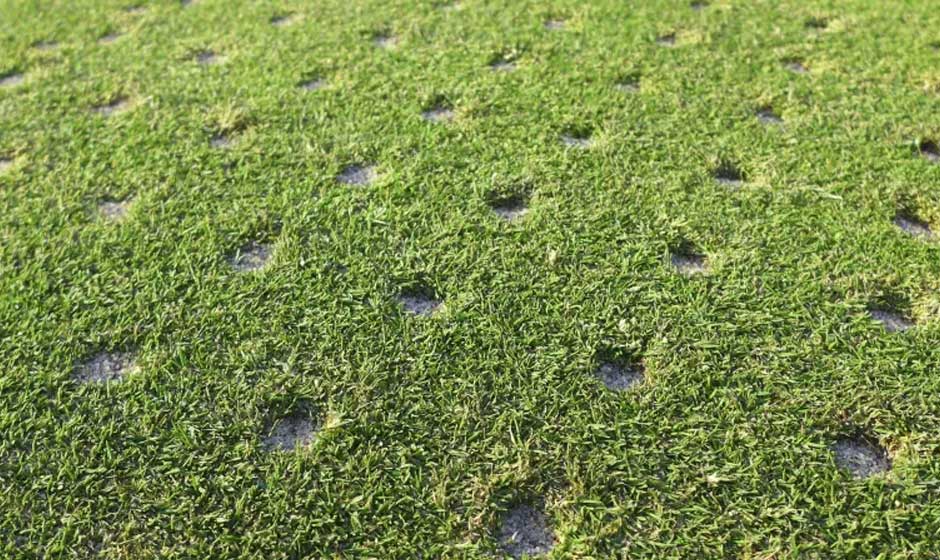
Aeration is the process of creating openings in the soil to allow air, water, and nutrients to get to the grass’s roots. Overtime soil is compacted from foot traffic, mowing, and weather conditions. Compaction limits root expansion and the absorption of water and fertilizers becomes less efficient.
Best Time to Aerate
Cool-season grasses: Aerate early fall or early spring. Fall is the best choice because the grass is actively growing and can recover quickly.
Warm-season grasses: Aerate in late spring to early summer, when growth is at its peak.
Signs Your Lawn Needs Aeration
- Water puddles after rain
- Thin or patchy grass
- Hard, compacted soil
- Increased weed growth
Increased weed growth is also a sign your lawn needs aeration. Most importantly, every lawn needs regular aeration (once a year is best!) to help them breathe and absorb nutrients.
Fertilization: Feeding Your Lawn the Right Way
Why Fertilization is Essential
Grass needs nutrients to thrive. Fertilizers contain the necessary nutrients: Nitrogen, Phosphorus, and Potassium. The lawn will also struggle to stay healthy if you do not aerate, water, and fertilize it.
Best Times to Fertilize
Early Spring: Fertilize quickly to promote new growth as the lawn wakes from dormancy. Use a slow release fertilizer for steady nourishment, and to provide a light early spring application.
Late Spring: Prior to the summer heat, apply fertilizer to support vigorous growth.
Early Fall: This is the most crucial duration for the autumn feeding for cool-season grasses. It strengthens the roots and readies the lawn for the winter season.
Late Fall: A last late fall feeding allows your lawn to store nutrients for early spring growth.
Fertilizer Tips
- Test your soil before fertilizer application.
- To prevent over-fertilization, follow the suggested application rates.
- After fertilization, water your lawn to help nutrients absorb.
- Seeding: Filling in Bare Spots and Thickening Your Lawn
Seeding: Filling in Bare Spots and Thickening Your Lawn
The Importance of Overseeding
Seeding, also known as overseeding, brings in new grass types, enhancing lawn density, improving color, and increasing disease resistance. Even healthy lawns can thin out over time, making overseeding vital.
Best Seeding Time
Cool-season grasses: Late summer to early fall is ideal. Warm soil and cooler air provide the ideal conditions for seed germination.
Warm-season grasses: Late spring to early summer is best when warm temperatures are consistent.
Successful Seeding Tips
- Aerate before seeding to provide seeds with better contact to the soil.
- Until germination, the soil must remain moist.
- Avoid areas of heavy foot traffic with newly seeded soil.
Seasonal Lawn Care Calendar
Spring
- Aerate (if needed) for compacted soil.
- Lightly fertilize to encourage grass growth after winter.
- In spring, overseed for early growth to fill in the bare spots.
Summer
- In late spring or early summer, aerate warm-season grasses.
- During summer heat, fertilize to keep grass color and to maintain resilience.
- In the summer, water deeply to encourage deep root growth and do less frequent watering.
Fall
- In early fall, aerate cool-season grasses.
- Overseed to thicken the lawn.
- Fertilize heavily to encourage strong root growth for winter.
Winter
- During dormancy, do not fertilize.
- Keep the lawn free from debris and heavy traffic.
Combining Aeration, Fertilization, and Seeding
Understanding the relationship between aeration, fertilization, and seeding is critical for the health of your lawn.
- Soil is opened and airflow is created through aeration.
- Fertilization increases and strengthens root growth.
- After fertilization, seeding will fill in bare spots and develop thick, healthy turf.
For best results, aerate the lawn first, then fertilize and seed to ensure the nutrients and seeds reach deep into the soil. Doing this gives the lawn the best chance of success.
Common Mistakes
Over fertilization: this will burn the lawn and encourage weed growth.
Improper seeding: seeds will die if they are planted in extreme heat or extreme cold.
Not aerating the lawn: compacted soil decreases the effectiveness of water and fertilizer.
Ignoring soil testing: Fertilization may not be effective without knowing your soil’s pH and nutrient levels.
When to Call in the Professionals
Although many homeowners tend to their lawns on their own, hiring professional lawn care services saves time, and guarantees better results. Professionals understand the right timing, techniques, and products to optimize your lawn’s health. For people in Ballwin and the neighboring areas, professional lawn care services ensure customized plans which maximise the potential of your yard.
Conclusion
A healthy lawn, year-round, requires more than just occasional watering and mowing. There are specific times for each essential step: aeration, fertilization, and seeding must be performed to ensure maximum effectiveness. You’ll have a beautiful lawn that stays healthy, and is free from diseases, pests, and weeds.
Regardless, the secret to a lush, beautiful lawn is in timing and consistency.