
The Homeowner’s Guide to Pellet Stove Maintenance: A Season-by-Season Checklist
If you have ever lived through a cold snap with a stove that refused to light, you already know why maintenance matters. Pellet stoves are wonderfully convenient compared to old wood burners, but that convenience comes with a catch. They have moving parts, electrical components, and a fuel system that all need regular attention. Skip the upkeep and you end up with a cold house, an expensive service call, or both.
The good news is that most of the work is simple enough for any homeowner to handle. You do not need special skills, just a routine. I have broken it down by season because that is how the work actually falls across the year. Some tasks happen every week in winter, others once a year in the shoulder seasons. Follow this checklist and your stove will run cleaner, heat better, and last years longer.
Why Bother With Regular Maintenance?
Before we get into the checklist, it helps to understand what you are actually preventing. Pellet stoves work by feeding compressed sawdust pellets into a burn pot, where a fan-driven flame produces heat that gets pushed into the room. Every step in that process creates residue. Ash builds up in the burn pot, fine dust collects in the venting, and creosote can slowly form in the exhaust path even though pellets burn much cleaner than cordwood.
A dirty stove does three bad things. It burns less efficiently, which means you buy more pellets for the same heat. It strains components like the auger motor and combustion blower, which shortens their life. And in the worst cases, a neglected venting system becomes a genuine fire risk. None of that is worth saving twenty minutes on a Saturday.
Fall: The Startup Season
This is the most important stretch of the year. You are waking the stove up after months of sitting idle, and how you do that sets the tone for the whole winter.
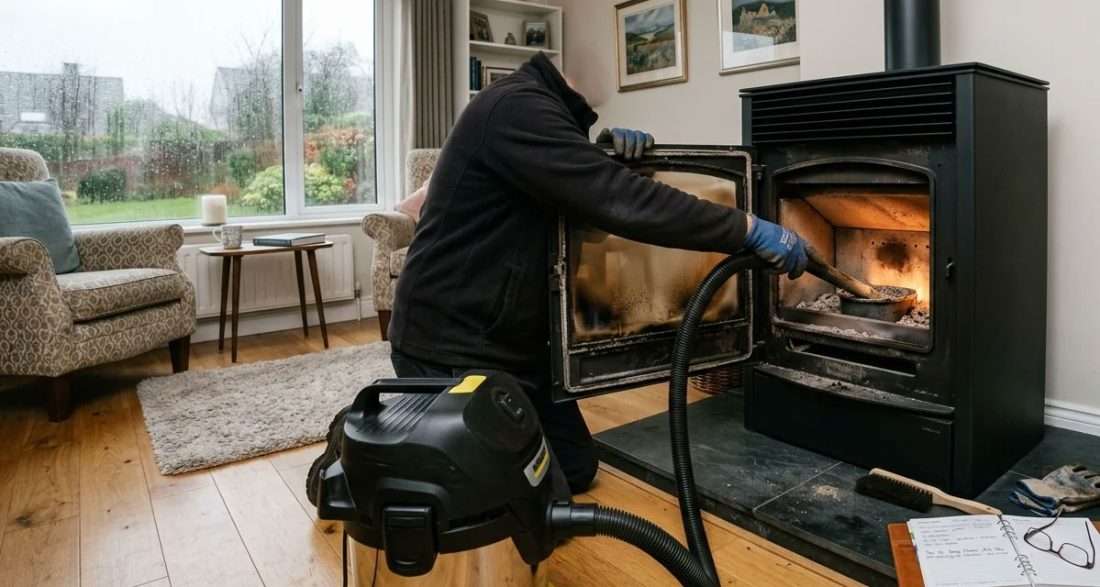
Deep clean the entire unit before the first burn. Open the stove up and vacuum out the firebox, the ash pan, and behind the panels where dust settles. Use a vacuum designed for ash if possible, since fine ash can clog a household vacuum and blow dust back into the room.
Inspect the burn pot and igniter. The burn pot should be free of hardened carbon deposits. If you see clinkers, which are those glassy, melted lumps of ash, scrape them out. Check the igniter for cracks. A cracked igniter is the number one reason a stove clicks but never actually lights.
Check the door gasket. Close the door on a dollar bill and try to pull it out. If it slides out easily anywhere along the seal, the gasket is worn and needs replacing. A leaky gasket throws off the air-to-fuel ratio and makes the stove burn poorly.
Clean the venting from top to bottom. Depending on your setup, this might mean brushing out a vertical vent pipe or clearing a horizontal termination outside. Clear any wasp nests, bird nests, or debris. Animals love vent terminations in late summer.
Test everything before you need it. Run the stove on a mild October day. Do not wait for the first freezing night to discover the auger is jammed or the thermostat is dead.
Buy your pellets early. Fuel quality varies a lot between brands and even between batches. Look for pellets with low ash content, ideally under one percent, and store them off the ground in a dry spot. Damp pellets crumble, burn cool, and gum up the auger.
Winter: The Weekly Grind
Once the heating season is in full swing, maintenance becomes a rhythm rather than an event. These are the jobs that keep the stove running day after day.
Empty the ash pan regularly. How often depends on your stove and how hard you run it, but a weekly check is a good habit for most households. Let the ash cool completely before removing it, ideally overnight. Even then, treat it as hot. Embers can hide in ash for a surprisingly long time.
Scrape the burn pot every few days. Carbon builds up fast in the burn pot and blocks the air holes. A few seconds with a scraper while the stove is off and cool keeps the flame pattern healthy. If your flame looks lazy, orange, or uneven, a clogged burn pot is usually the culprit.
Wipe the glass. Most stoves have an air wash system that keeps the glass fairly clean, but a film still develops. A damp cloth or a bit of wood stove glass cleaner handles it. Never use abrasive pads, which scratch the ceramic glass and weaken it.
Vacuum the hopper area and check the pellets. Sawdust and fines settle at the bottom of the hopper and can bridge, meaning pellets stop flowing into the auger even though the hopper looks full. Run your hand through the pellets occasionally and clear out the dust.
Listen to your stove. This sounds odd, but it works. A healthy pellet stove has a steady hum. New squealing, grinding, or rattling usually means a blower bearing is going or something has loosened. Catching it early turns a motor replacement into a simple repair.
Keep an eye on the flame. A good flame is bright yellow to white and stays inside the burn pot. Dark orange, sooty flames mean poor combustion, which points to dirty air passages, wet pellets, or a venting problem.
Spring: The Shutdown Season
When the last cold night passes, most people just switch the stove off and forget it. That is a mistake. A proper shutdown protects the stove over the summer and makes fall startup painless.
Burn the hopper down completely. Old pellets absorb humidity over the summer, swell, and turn into a mushy plug that can jam the auger in the fall. Run the stove until the hopper is empty, then vacuum out every last pellet and all the fines.
Do a final deep clean. Vacuum the firebox, the ash pan, the venting, and the blower compartments one more time. Ash left sitting all summer attracts moisture, and moisture plus ash creates a corrosive mess inside your stove.
Clean the blowers. Both the convection blower and the combustion blower collect dust on their blades, which unbalances them and wears the bearings. A soft brush and a vacuum handle most of it. If you are not comfortable opening those compartments, this is a good job for a technician during an annual service visit.
Inspect the vent termination one last time. Make sure the cap is intact and the screen is clear before the stove sits idle.
Seal the stove opening. Some homeowners close the damper or cover the vent termination to keep summer humidity and insects out. Just remember to remove any cover before the first fall burn.
Summer: The Planning Season
The stove is off, so the work here is mostly about scheduling and budgeting.
Book your annual professional inspection now. Technicians are slammed in October and November. Call in July or August and you can get an appointment on your terms, often at a better price. A professional service typically covers things homeowners should not touch, like checking the exhaust path for hidden creosote, testing the pressure switch, and verifying the wiring.
Stock up on wear parts. Door gaskets, igniters, and firebricks are cheap insurance. If your stove model is older, confirm that parts are still available. Some brands disappear, and knowing that before winter beats finding out in January.
Watch for pellet deals. Retailers often discount leftover inventory in late spring and early summer. If you have dry storage, buying early can save real money.
A Few Habits That Tie It All Together
Keep a small notebook next to the stove and jot down when you clean it and anything odd you notice. Patterns emerge fast. If the glass is sooting up every week, that is information. If the auger sounds different after switching pellet brands, that is information too.
Also, keep a fire extinguisher nearby and check the batteries in your smoke and carbon monoxide detectors when you do the fall startup. Every fuel-burning appliance deserves that level of respect, no matter how clean it burns.
The Bottom Line
A pellet stove asks for maybe fifteen minutes a week during the season and a few focused hours in spring and fall. In exchange, you get steady heat, lower fuel bills, and a machine that can easily last fifteen or twenty years instead of dying at seven. The homeowners who complain about pellet stoves are almost always the ones who treated them like a fireplace, something you load and forget. Treat yours like the small appliance it is, follow the seasons, and it will quietly earn its keep every single winter.