
Old Houses, Wet Basements: A Practical Guide to Water Damage in Farmhouse-Style and Historic Homes
If you love older homes — the wide-plank floors, the stone foundations, the deep porches — you have almost certainly loved one with a damp basement. Moisture is the constant companion of pre-war construction. Stone and rubble foundations were never meant to be waterproof; they were meant to breathe, and for a hundred years the cellar was a place you stored potatoes, not a family room.
The trouble starts when we ask these houses to do something they were not designed for. We finish the basement, we seal the walls, we add a bathroom below grade, and suddenly the same moisture that used to evaporate harmlessly is trapped behind drywall. Here is how to live with an old house and water, without letting water win.
Understand how your foundation handles moisture
Stone, brick and early block foundations wick water. That is not a defect — it is how they were built. Lime mortar allows moisture to move through the wall and dry to the interior. Painting these walls with a “waterproofing” coating often makes things worse: it traps moisture in the masonry, the mortar deteriorates, and the coating eventually peels off in sheets. The better approach is to manage water on the outside (grading, gutters, drainage) and accept a small amount of vapour movement on the inside, controlled with a dehumidifier.
The big three: gutters, grading and grade-level doors
Most farmhouse basement flooding comes from the surface, not the water table. Walk your house after a hard rain and check three things. Are the gutters overflowing at the corners? Does the ground slope toward the house anywhere (especially on the side where an addition or porch was built)? And is there a bulkhead or grade-level door with a rotted sill that lets water in every storm? Fixing these three is usually cheaper than any interior system and solves the problem more often than not.
When it does flood
Sooner or later, an old basement takes on water — a spring thaw, a stalled thunderstorm, a sump pump that quits during a power outage. The instinct is to wait for it to drain and let it dry on its own. In a bare-earth cellar, that is fine. In a finished space, it is the most expensive decision you can make.
Within a couple of days, wet drywall, carpet pad and the bottom of framing become a mould problem, and mould in an old house is harder to fix because there are so many hidden cavities. Professional basement flooding cleanup means extracting the water, pulling the materials that cannot be dried (usually the lower two feet of drywall and any carpet pad), and running commercial dehumidifiers and air movers until moisture meters — not your hand — say the framing is dry. It is a few days of noisy equipment versus weeks of demolition later.
Old plumbing, old wiring, new risks
A lot of water damage in historic homes has nothing to do with the foundation. Galvanised supply lines corrode from the inside and let go without warning. Original cast-iron drains crack. Radiator valves weep for years behind furniture. If you are renovating, budget for new supply lines in any wall you open, put a drain pan and leak sensor under the water heater, and consider an automatic shut-off on the main. These are unglamorous, but they prevent the kind of slow leak that quietly rots a floor joist.
If you are dealing with a leak that has been going for a while — a stain that keeps coming back, a soft spot in the floor, a musty smell that never quite leaves — it is worth having a company that offers water damage restoration services in Washington DC do a moisture inspection before you start opening walls. Thermal imaging and pin meters will show where the water is actually travelling, which in balloon-framed houses is often nowhere near where it shows up.
Finishing a basement in an old house (the right way)
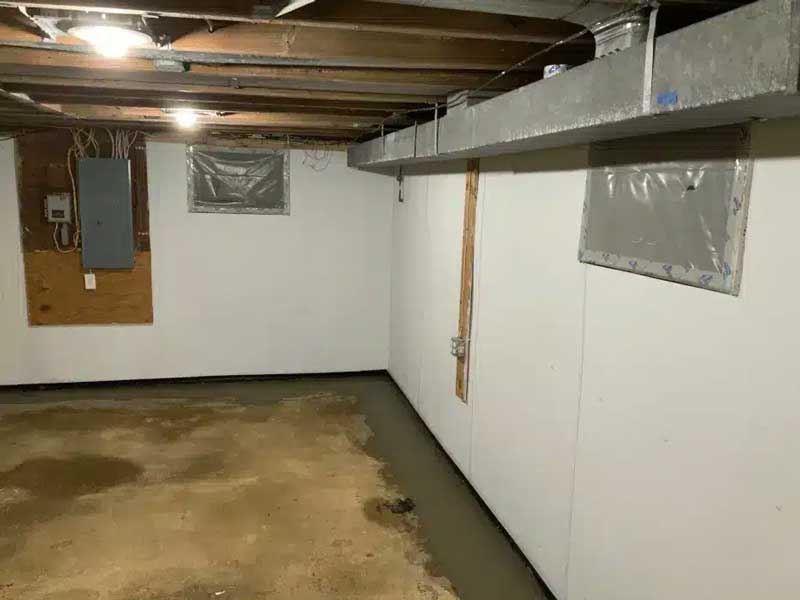
If you want a finished lower level, do it with materials that can get wet. Use a dimple membrane against the stone wall with a drainage channel to a sump, closed-cell foam or rigid insulation rather than fibreglass batts, paperless or cement-board wall finishes for the bottom course, and a floating floor over a vapour barrier rather than glued-down hardwood. Keep the finished wall an inch or two off the stone, and give the sump a battery backup. Old houses in the mid-Atlantic — from the Hudson Valley down through Maryland and Virginia — lose power in exactly the storms that flood basements.
Have a plan before you need one
Know where your main water shut-off is and make sure it actually turns. Keep the contact for a local emergency water damage restoration in Silver Spring contractor somewhere the whole household can find it — the first hour after discovering water is when the outcome is decided, and searching for a company at two in the morning is not the time to start. Photograph your basement and its contents once a year for insurance purposes.
The point of all this
None of this is about making an old house into a new one. It is about respecting how it was built, managing water where it comes from, and responding quickly on the day it gets in anyway. Do that, and a two-hundred-year-old foundation will keep doing exactly what it has always done — holding the house up, a little damp, and perfectly fine.