
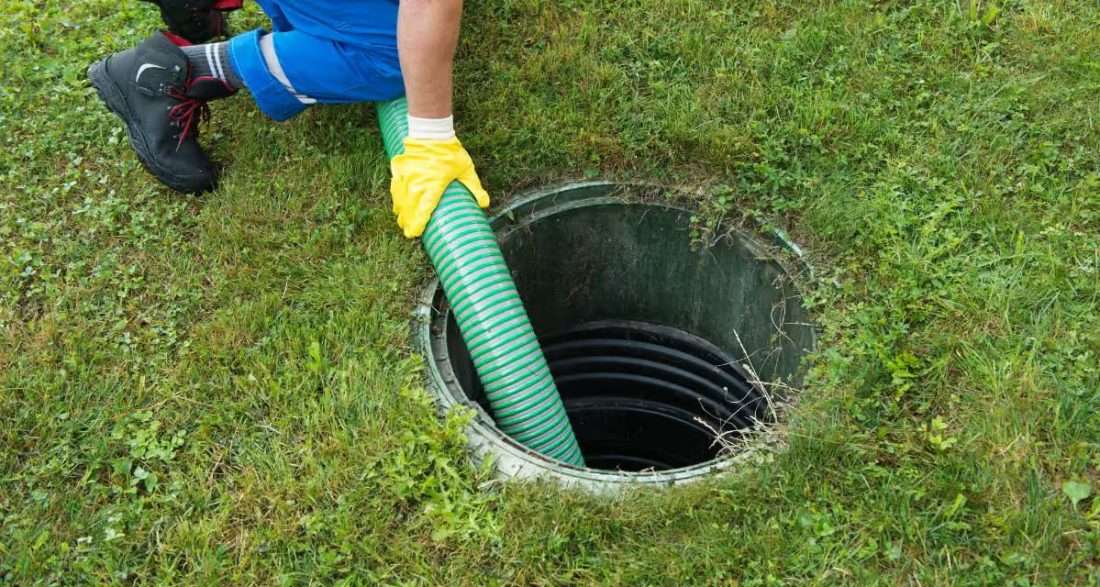
How Often Should You Pump Your Septic Tank? A Practical Guide for Homeowners
If you own a home with a septic system, you have probably heard the standard advice: pump your tank every three to five years. It gets repeated everywhere, from hardware store counters to county extension pamphlets. But here is the honest truth. That three-to-five-year rule is a rough average, not a schedule. Some households need septic pumping every two years. Others can comfortably go six or seven. The difference comes down to how your specific household uses water, how big your tank is, and what you send down the drains.
This guide breaks down the real factors that determine pumping frequency, how to tell whether your tank is due, and what happens if you keep putting it off. No scare tactics, just practical information you can use to protect one of the most expensive systems attached to your house.
Why Pumping Matters in the First Place
A septic tank is not a self-cleaning machine. It is a settling chamber. Solids sink to the bottom and form a layer of sludge, oils and grease float to the top as scum, and the partially clarified liquid in the middle flows out to the drain field for final treatment.
The bacteria in the tank do break down some of that solid material, but they cannot keep up forever. Sludge and scum slowly accumulate, and the usable liquid space in the middle shrinks. When those layers grow too thick, solids start carrying out into the drain field with the wastewater. Drain fields are not designed to handle solids. Once clogged, a drain field can cost $10,000 to $25,000 or more to replace, depending on your property and local regulations.
Pumping removes the accumulated solids and resets the clock. It is routine maintenance for your septic system, the same way oil changes are routine maintenance for your car. Skip them long enough and you are not saving money, you are deferring a much bigger bill.
The Factors That Actually Determine Your Pumping Schedule
Household Size and Water Use
More people means more wastewater, and more wastewater means solids accumulate faster. A family of six generates roughly three times the load of a retired couple in the same house. High water use also matters on its own, because a tank that is constantly flushing through does not give solids as much time to settle.
Tank Size
Older homes often have smaller tanks, sometimes 750 or 900 gallons, while newer construction typically uses 1,000 to 1,500 gallon tanks. A small tank serving a large family will fill with solids much faster than the same family in a house with a bigger tank. If you do not know your tank size, your county health department or permitting office usually has records, and a service technician can measure it during your next visit.
Garbage Disposal Habits
A garbage disposal is rough on a septic tank. Ground-up food scraps add solid load faster than the bacteria can break it down, and they tend to be greasy, starchy material that does not settle or decompose cleanly. Households that use a disposal daily often need pumping a full year or more sooner than similar households that scrape plates into the trash.
What Goes Down the Drains
Beyond food, the usual suspects speed things up: cooking grease poured down the sink, coffee grounds, cat litter labeled as flushable, paper towels, and wipes of any kind. None of these break down the way toilet paper does. On the flip side, things that kill tank bacteria also cause problems, because dead bacteria means less breakdown of solids. Harsh drain cleaners, bleach poured in large quantities, and certain medications all reduce the biological activity in the tank.
System Age and Condition
An older tank with a cracked baffle or a compromised drain field may need attention more often. If your system has a history of problems, treat the standard intervals as a ceiling rather than a floor.
A Practical Way to Estimate Your Interval
Rather than guessing, you can use a simple measurement approach. Have your tank pumped, then check the sludge and scum levels once a year. Many technicians will do this during a service visit, and some homeowners do it themselves with a measuring tool.
The general rule of thumb is that the tank needs pumping when the sludge and scum layers together take up about one third of the liquid depth, or when the scum layer sits within a few inches of the outlet baffle. If you reach that threshold in two years, pump every two years. If it takes five, pump every five. You have just built a schedule based on your actual household instead of a generic average.
For a starting point, the Environmental Protection Agency suggests that a 1,000 gallon tank serving a typical household of three or four people will usually need pumping every three to four years. Larger households or smaller tanks push that interval shorter.
Warning Signs Your Tank Is Overdue
Even without measuring, your plumbing will usually tell you when things are getting critical. Watch for these:
- Slow drains throughout the house, especially when multiple fixtures are affected at once
- Gurgling sounds in pipes when the washing machine or dishwasher runs
- Standing water or soggy spots above the tank or drain field, particularly after rain
- Sewage odors indoors or in the yard
- Unusually lush, green grass over the drain field, which sounds nice but means liquid is surfacing and fertilizing the soil
- Backups into the lowest drain in the house, usually a basement floor drain or a first-floor shower
By the time you see these symptoms, the situation is already advanced. A backup or a saturated drain field is not a maintenance issue anymore, it is a repair situation. The goal of a pumping schedule is to act long before any of this appears.
Common Myths Worth Clearing Up
“Additives and you never have to pump.” Products claiming to eliminate pumping entirely are selling a fantasy. Some bacterial additives can help a struggling tank, but nothing in a bottle dissolves sludge and scum fast enough to replace physical removal. No additive will break down grit, plastics, or grease buildup.
“If it is not backing up, it is fine.” Backups are a late-stage symptom. A system can be quietly damaging its drain field for years before anything visible happens indoors.
“Pumping fixes everything.” Pumping removes solids, but it does not repair a crushed line, a failed baffle, or a saturated drain field. That is why a good service visit includes a brief inspection, not just a hose in the tank.
A Few Habits That Stretch Your Time Between Pumpings
None of these replace pumping, but they slow the accumulation:
- Spread laundry loads across the week instead of doing them all on one day
- Use high-efficiency fixtures and fix running toilets promptly
- Skip the garbage disposal for anything greasy or starchy
- Keep paint, solvents, medications, and household chemicals out of the drains
- Divert roof drains and surface water away from the drain field
- Avoid parking vehicles or placing heavy structures over the tank or field
The Bottom Line
Start with the three-to-five-year guideline if you have no other information, but treat it as a starting point, not an answer. Learn your tank size, pay attention to how many people live in the house and how much water they use, and check your solids levels annually. Within one or two cycles you will know your real interval, and it will probably be different from your neighbor’s.
A pumping visit typically costs a few hundred dollars. A drain field replacement costs tens of thousands. That comparison is the entire argument for staying on schedule, and it is the reason experienced homeowners put septic maintenance on the calendar the same way they schedule HVAC service and gutter cleaning. It is not exciting, but it is one of the highest-return maintenance tasks on a home.